SEO vs Paid Ads: Which Strategy Delivers Better ROI?
In this guide, you’ll learn why your website is not ranking on Google, the most common issues holding businesses back, and practical fixes you can apply right away.
SEO vs Paid Ads: Which Strategy Delivers Better ROI?
When businesses want to grow online, one of the most common questions is: Should I invest in SEO or paid ads? This debate — SEO vs Paid Ads — matters because both strategies can drive traffic, leads, and sales, but they work in very different ways.
Choosing the right approach can determine whether your marketing budget delivers long‑term growth or quick wins.
Background: Defining the Strategies
What is SEO?
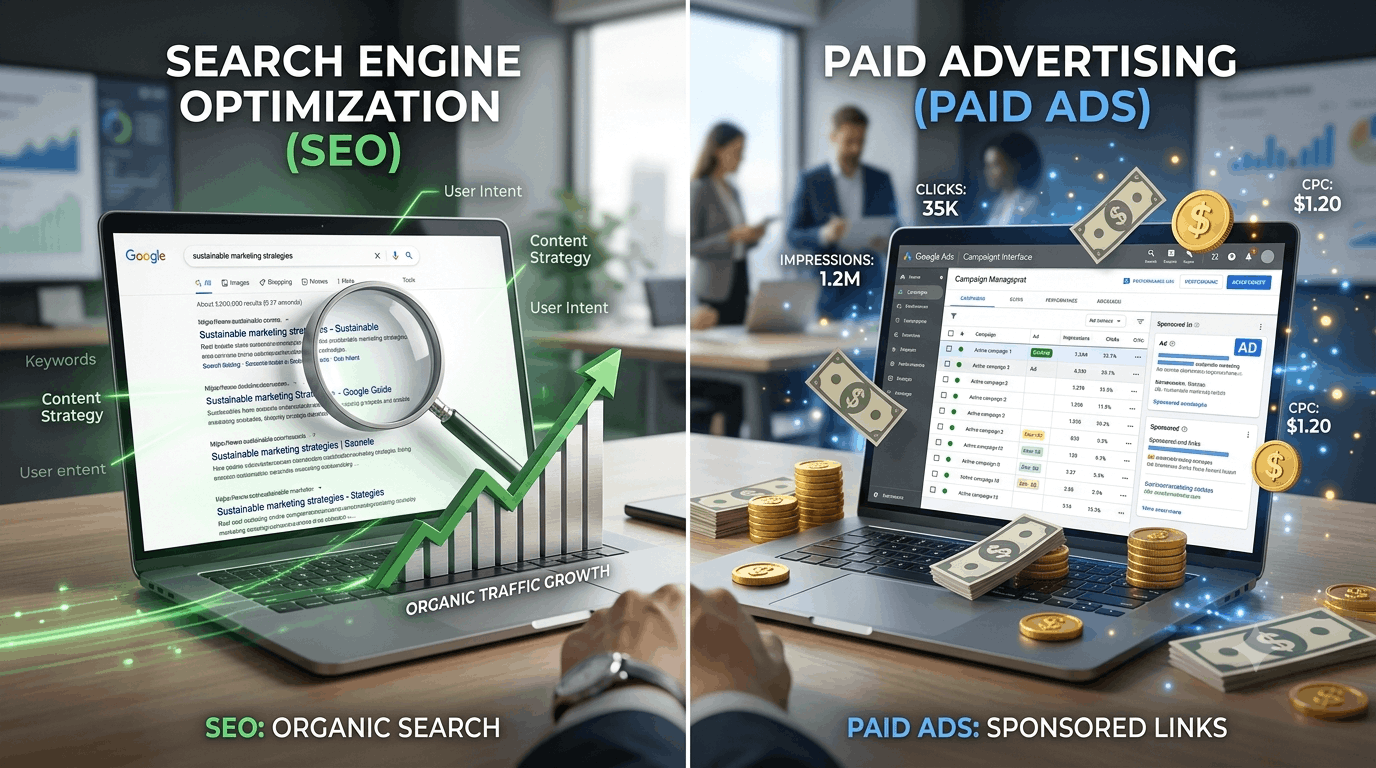
Search Engine Optimization (SEO) is the process of improving your website so it ranks higher in search engines like Google. It involves optimizing content, technical performance, and backlinks to attract organic (non‑paid) traffic. The benefit? Once your site ranks, you can generate consistent traffic without paying for every click.
What is Paid Ads?
Paid ads, often called PPC (Pay‑Per‑Click), are advertisements you run on platforms like Google Ads or Facebook Ads. You pay each time someone clicks your ad. The advantage is instant visibility — your business can appear at the top of search results or social feeds within hours of launching a campaign.
SEO vs Paid Ads: Pros and Cons
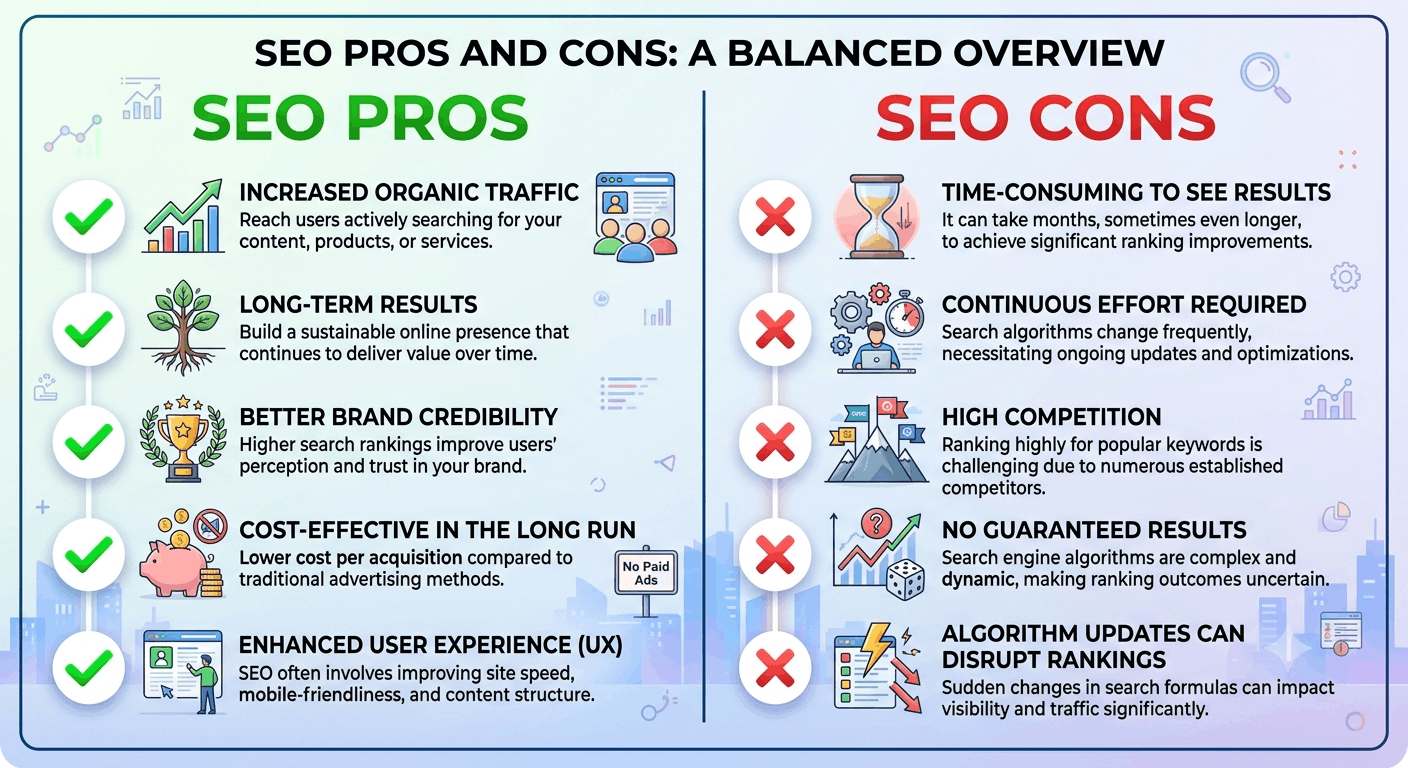
SEO Pros
Sustainable, long‑term traffic
Builds brand credibility and trust
Cost‑effective over time
Compounds results — rankings improve with consistent effort
SEO Cons
Takes time (months) to see results
Requires ongoing optimization and content creation
Competitive industries may need significant investment
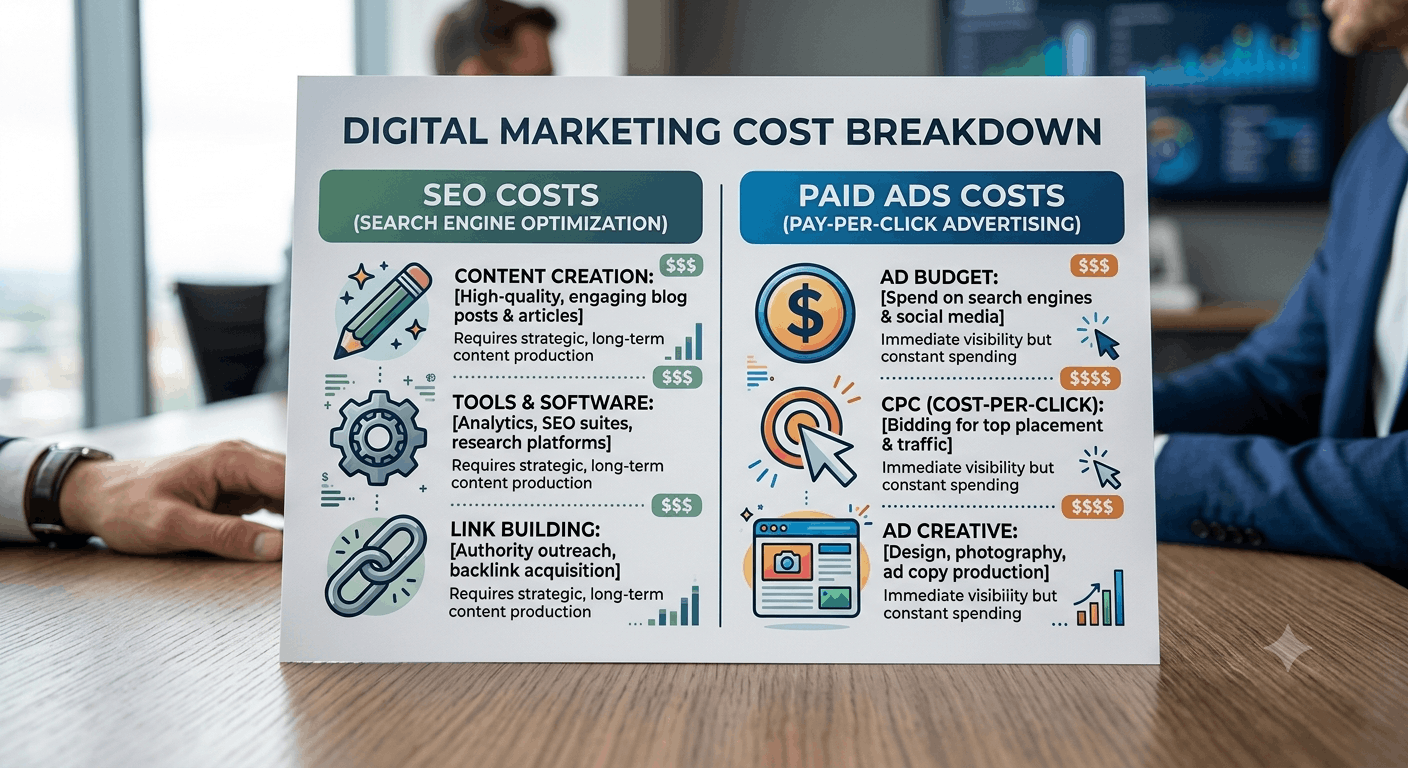
SEO Costs: Content creation, technical fixes, link building, and optimization tools. These are mostly upfront investments that continue to pay off as rankings grow.
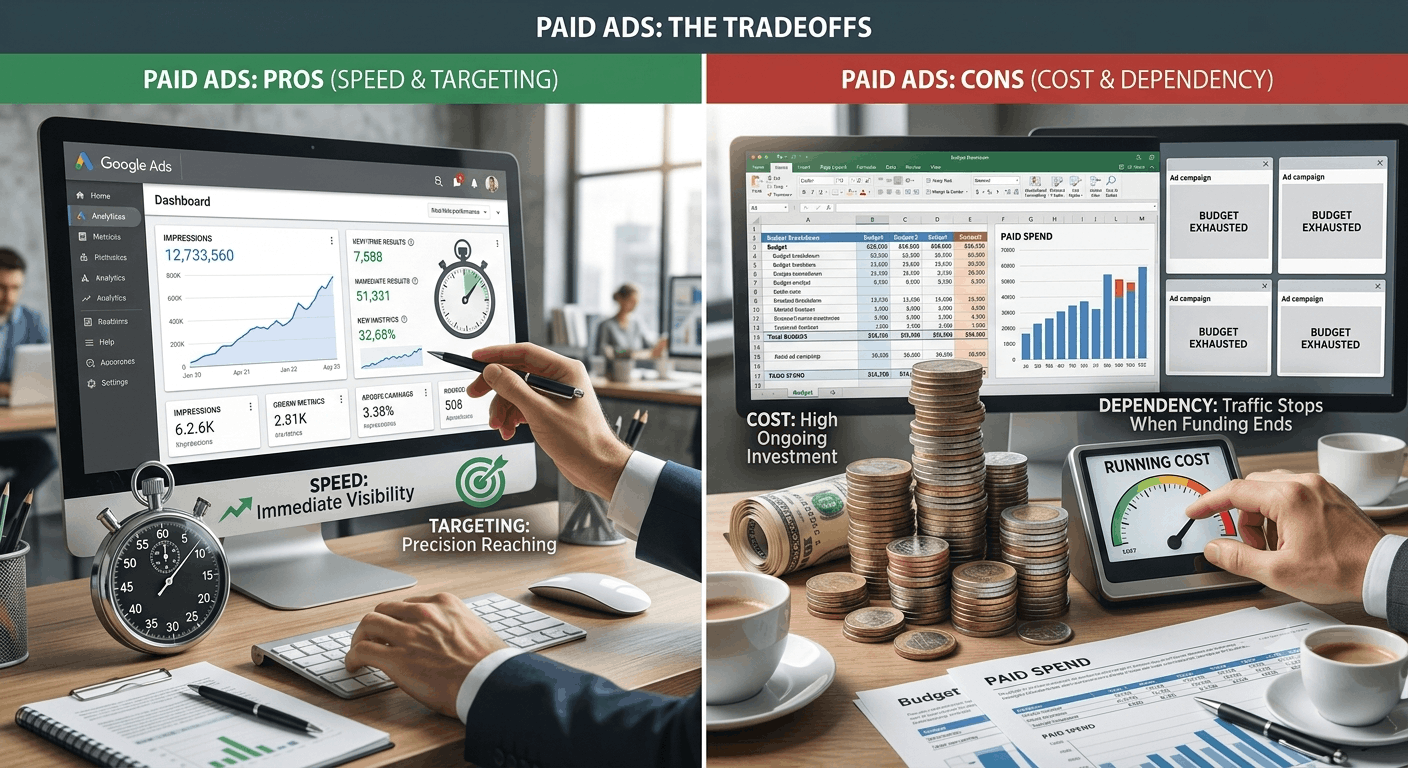
Paid Ads Costs: Daily budgets, CPC bidding, and creative design. Costs are ongoing, and traffic disappears once you stop spending.
Example: Spending $2,000 on SEO content may generate traffic for years, while $2,000 in ads may last only a few weeks.
Timeframe to Results
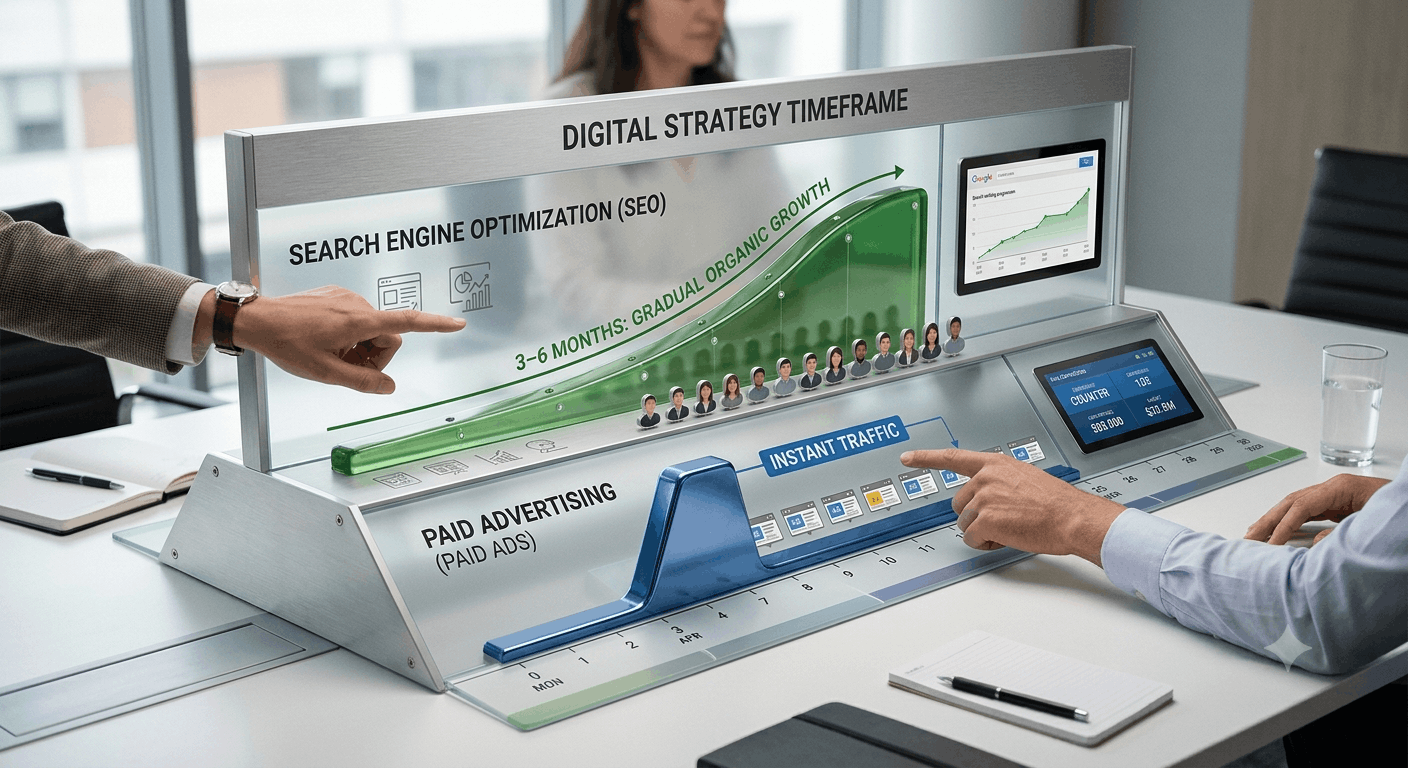
SEO: Typically 3–6 months before significant ranking improvements. Patience is required, but results compound over time.
Paid Ads: Traffic can start within hours of launching a campaign. Perfect for businesses needing immediate visibility.
Scalability
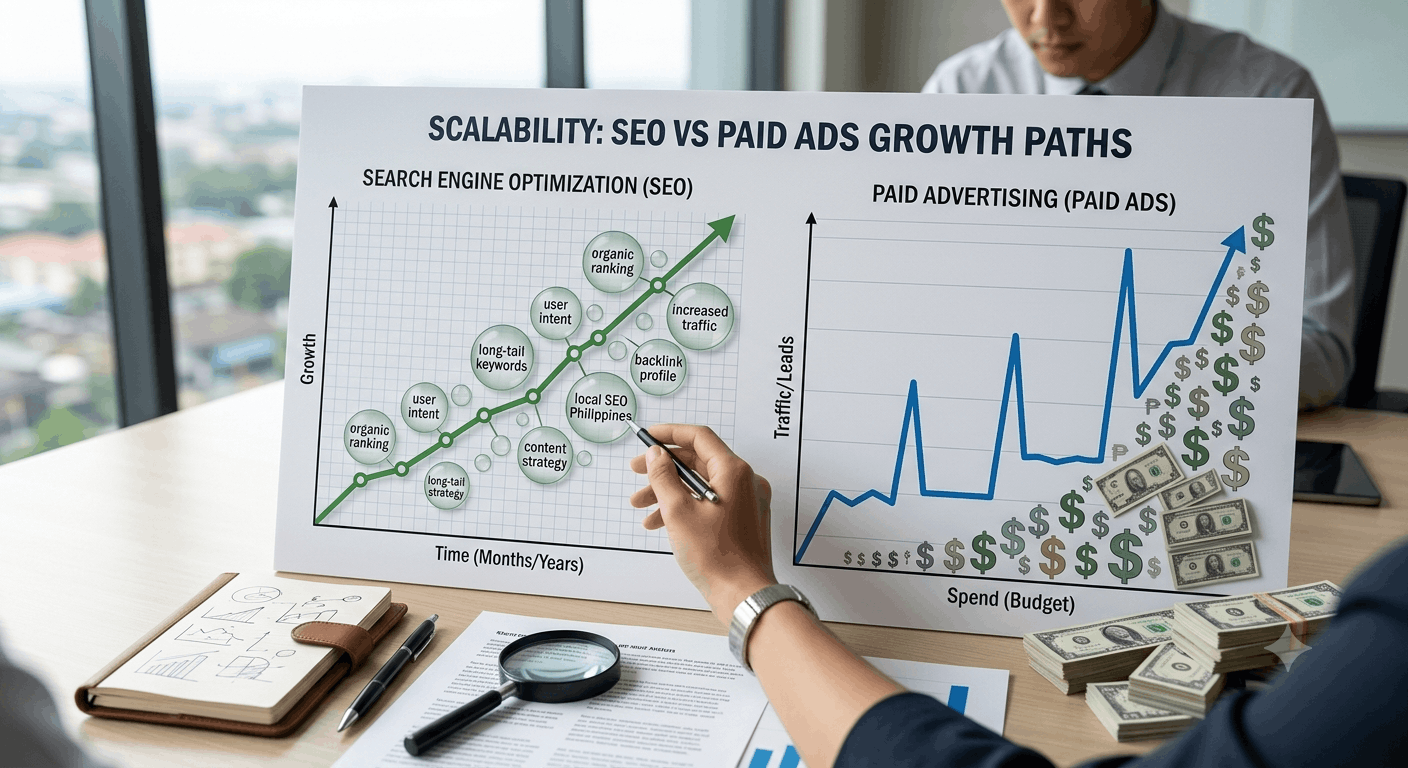
SEO: Scales naturally as your content ranks for more keywords. One blog post can attract traffic for years.
Paid Ads: Scales only if you increase your budget. More clicks = more cost.
Trust & Credibility
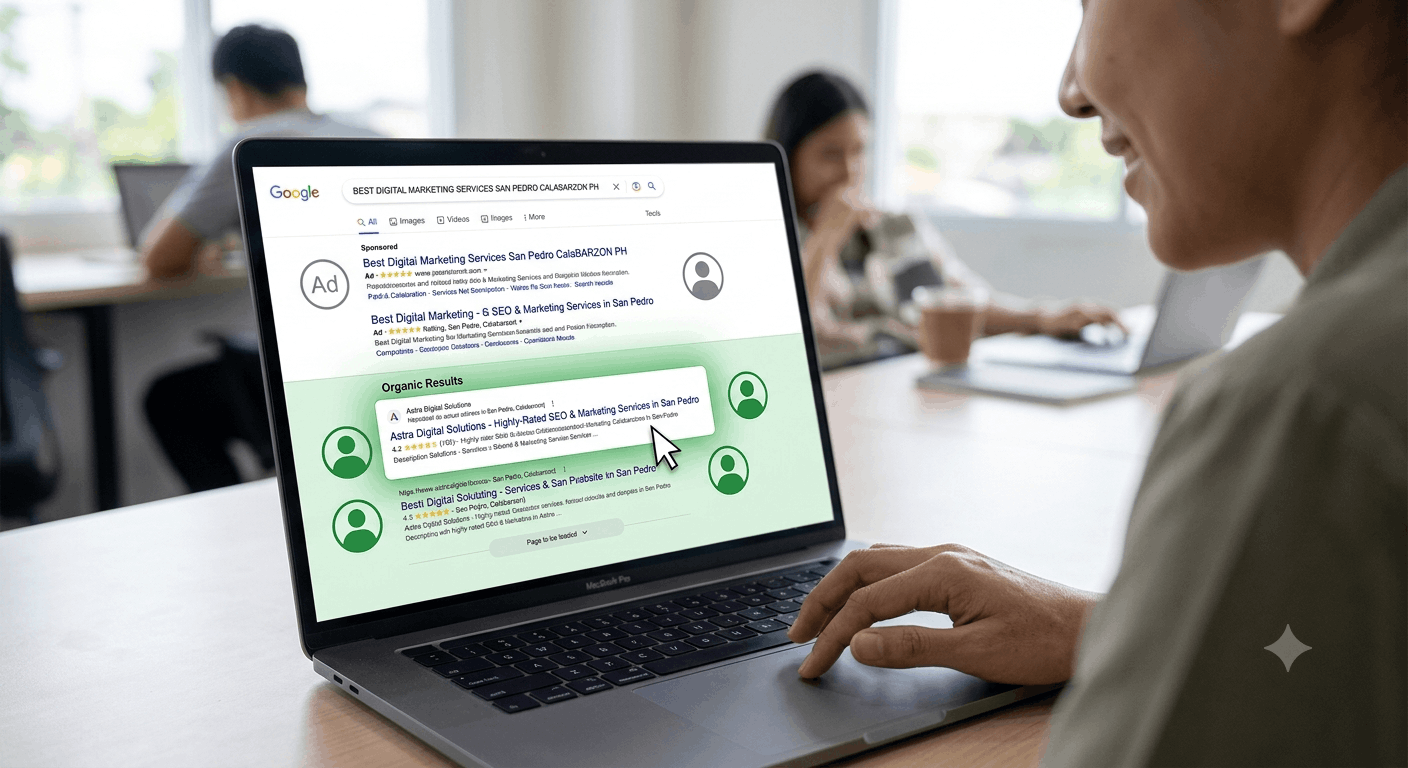
Studies show users often trust organic results more than ads. Many skip the “Ad” label and click on SEO‑ranked pages instead. This credibility makes SEO a stronger long‑term investment for brand authority.
Best Use Cases
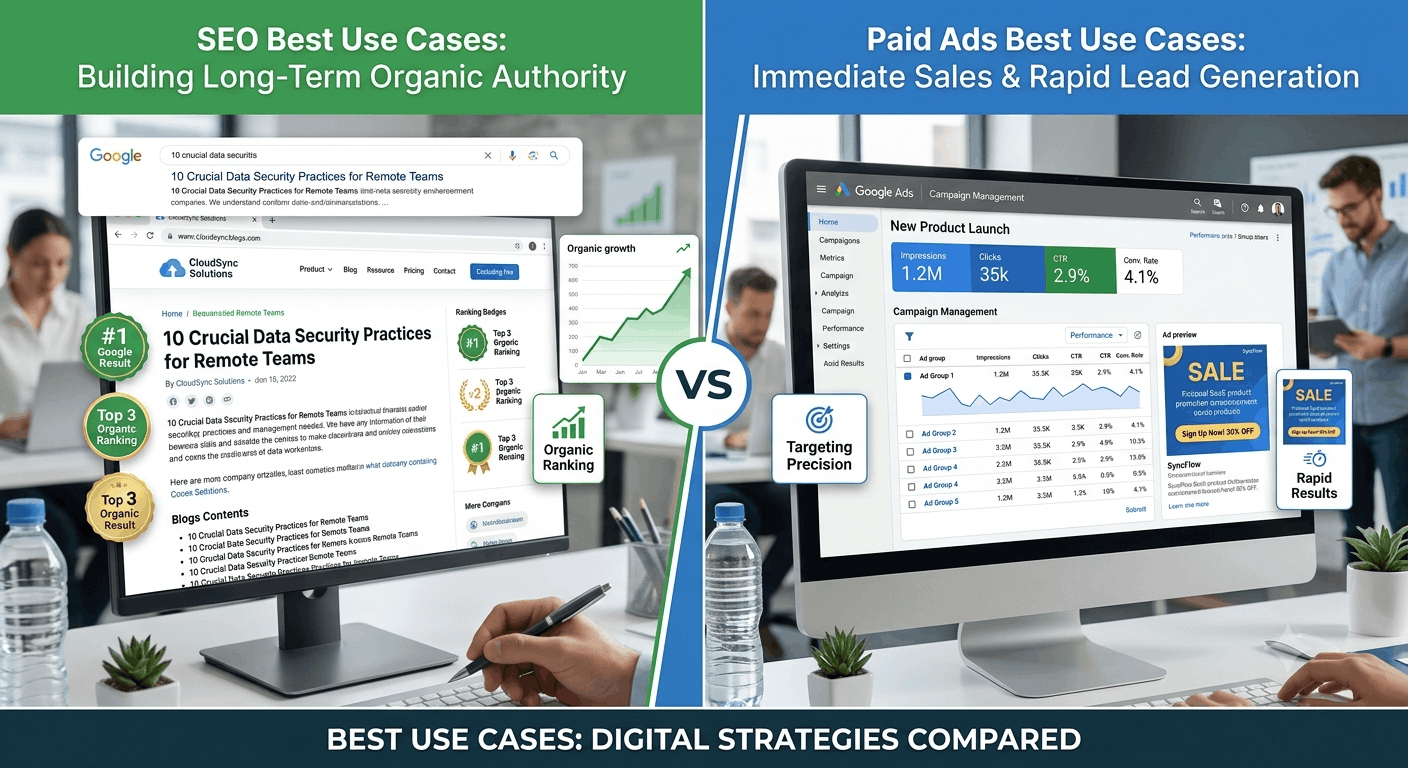
SEO: Ideal for businesses focused on long‑term growth, content marketing, and building authority. Example: A law firm publishing blogs to rank for “family lawyer near me.”
Paid Ads: Perfect for short‑term campaigns, promotions, or testing new offers. Example: An e‑commerce store running ads for a holiday sale.
ROI Comparison: SEO vs Paid Ads
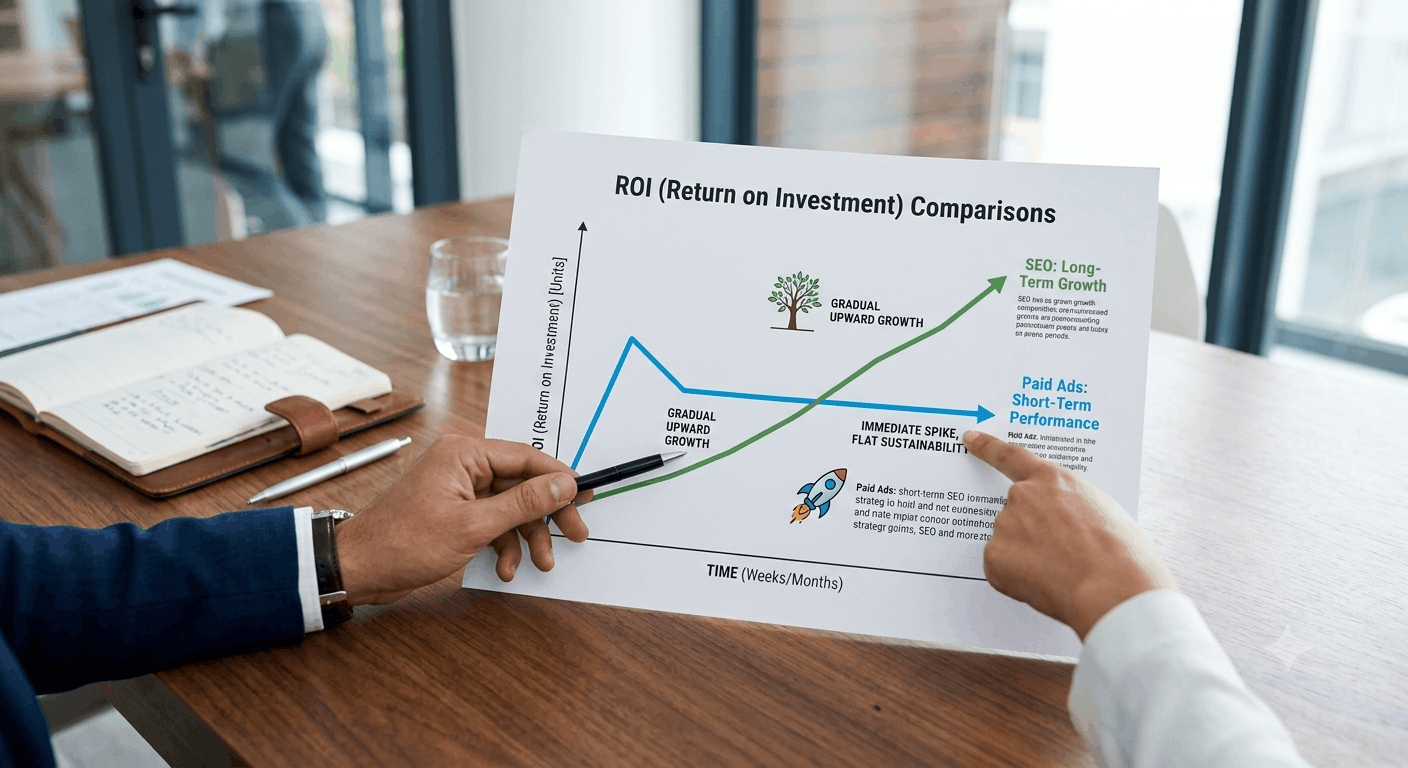
SEO ROI: Higher in the long run. Once rankings are established, traffic is essentially free, and conversion rates improve with trust.
Paid Ads ROI: Strong in the short term. You can measure results instantly, but costs rise with competition and ongoing campaigns.
The best ROI often comes from combining both strategies — using paid ads for immediate traffic while building SEO for sustainable growth.
Integration Strategy: Using Both Together
Smart businesses don’t choose one over the other — they integrate both:
Use Paid Ads to generate traffic while SEO builds authority.
Retarget ad audiences with SEO content.
Example: A startup runs ads for a product launch but invests in SEO blogs for long‑term visibility.
Case Study Example
A mid‑sized e‑commerce company invests in SEO to rank for “best running shoes online.” Over time, organic traffic steadily grows and drives consistent sales. During peak shopping seasons like Black Friday, they run Paid Ads to capture immediate demand.
The combination delivers both short‑term revenue and long‑term visibility — maximizing ROI.
Common Mistakes Businesses Make
Expecting SEO to deliver overnight results
Relying only on paid ads without building organic presence
Ignoring analytics and ROI tracking
Choosing keywords or audiences without proper research
Conclusion
When it comes to SEO vs Paid Ads, the better ROI depends on your business goals. SEO builds long‑term visibility and credibility, while paid ads deliver quick, targeted results. The smartest approach is often a balanced strategy that leverages both.
If you’re still unsure which strategy fits your business, that’s where I can help. As an SEO specialist, I work with businesses to improve visibility, optimize websites, and create campaigns that deliver real ROI. You can contact me for personalized support or subscribe to get more free tips and updates.
Get helpful SEO tips and insights to improve your website and grow your business.
We value transparency.
Before you commit to this plan, we’d like to connect with you directly. Our SEO Specialist will walk you through the process, answer your questions, and confirm the right fit.
Please leave your details below — we’ll reach out to arrange a meeting.
Reach Out to Your SEO Specialist
Get connected with us for any queries, information,and details about our services. Our team is always ready to serve you with everything you need. Our experts are always at your service.